I like good news, coffee houses, and Good magazine. This story has all three.
At the Corner Perk, a coffee house in Bluffton, SC, one anonymous customer started leaving money to pay for other people's drinks and food. This custom caught on, and now many people do it.
As psychologist Jonathan Haidt has so interestingly demonstrated, seeing other people do good things fills most people with a desire to do good things, too.
Tuesday, January 10, 2012


Monday, January 09, 2012
Utopian "Third Party" Movements are the Bane of Centrism
I am grateful to Solomon Kleinsmith to participate in his blog collective, The Rise of the Center.
Recently I got to voice a pet peeve about something that has bedeviled every centrist forum I have been part of: the desire to create a third party between the Democratic and Republican Parties.
I think that in this country third parties are always utopian, sectarian, and do more harm than good. In particular, they hurt the party that they are more in sympathy with by splitting the vote in an election. Not all third parties are centrist, by any means. But the effect is the same: third parties are a gift your enemies.
Moreover, like all utopian endeavors, they take up too many evenings with too little to show for it.
The Republicans and the Democrats have nearly all the governmental action. If you want to actually affect government policy, as I do, then you have to work within the big tent of one or the other major party.
There are many other ways to build up the world besides government policy, of course. Those other sectors allow for many fruitful centrist paths. But American politics does not.
Most of the other participants in the Rise of the Center discussion, including Kleinsmith, disagree with me on this.
I would be interested in the thoughts of Gruntled Center readers on this topic.
Recently I got to voice a pet peeve about something that has bedeviled every centrist forum I have been part of: the desire to create a third party between the Democratic and Republican Parties.
I think that in this country third parties are always utopian, sectarian, and do more harm than good. In particular, they hurt the party that they are more in sympathy with by splitting the vote in an election. Not all third parties are centrist, by any means. But the effect is the same: third parties are a gift your enemies.
Moreover, like all utopian endeavors, they take up too many evenings with too little to show for it.
The Republicans and the Democrats have nearly all the governmental action. If you want to actually affect government policy, as I do, then you have to work within the big tent of one or the other major party.
There are many other ways to build up the world besides government policy, of course. Those other sectors allow for many fruitful centrist paths. But American politics does not.
Most of the other participants in the Rise of the Center discussion, including Kleinsmith, disagree with me on this.
I would be interested in the thoughts of Gruntled Center readers on this topic.
Friday, January 06, 2012
Why President Obama Will Be Re-Elected
This first week of the year is devoted to posts on the big political picture.
The main reasons that I think President Obama will be re-elected is that:
a) he is the incumbent, so the sizable majority that voted for him last time will want to vote for him again;
b) the economy is improving; and
c) the Republicans will be unable to unite around an exciting and unifying candidate.
President Obama has been a very good president.
Conditions in the country and in the world are improving.
Obama is playing the long game of politics very well. When he was first elected, he knew he had about 18 months to pass the main pieces of his positive agenda. He did, most importantly by passing universal health care. He has also been relentlessly bi-partisan, working with any Republicans who were willing to help, compromising the way any competent politician must, and keeping his eye on the ball. He has had even greater successes in foreign policy. And he has waited until the turn into his re-election year to push back harder against the Republican leadership's intransigence.
The Republicans have played into Obama's hands. They have positioned themselves as against health care for millions, against saving the auto industry, against regulating the investment "banks" that nearly destroyed the world economy, against regulating the payday lenders that batten on the poor and working class, against supporting democratic movements in the Arab world, against reducing payroll taxes for people who live on their earnings, against raising taxes on the hugely rich. Most importantly, they have positioned themselves against compromising and working together in the way that government absolutely requires.
To take a signal example, I think universal health care will be a pillar of what most Americans appreciate about government, as they do Medicare and Social Security. Republicans also opposed Medicare and Social Security, but at least some of them voted for it. Not universal health care, though - the Republican leadership made sure their party was unanimously against it. And they call it "Obamacare." This short-sighted intransigence will come back to bite them for years to come.
The Republican Party is also suffering a three-way civil war among its establishment, social conservative, and libertarian wings. The Tea Party, in particular, is almost as much anti-Republican as it is anti-Democratic. I believe the Tea Party has shot its bolt and will be irrelevant after this election. But in the mean time, they will exacerbate the intransigence that is undermining the Republican Party as an actual instrument of government.
The main reasons that I think President Obama will be re-elected is that:
a) he is the incumbent, so the sizable majority that voted for him last time will want to vote for him again;
b) the economy is improving; and
c) the Republicans will be unable to unite around an exciting and unifying candidate.
President Obama has been a very good president.
Conditions in the country and in the world are improving.
Obama is playing the long game of politics very well. When he was first elected, he knew he had about 18 months to pass the main pieces of his positive agenda. He did, most importantly by passing universal health care. He has also been relentlessly bi-partisan, working with any Republicans who were willing to help, compromising the way any competent politician must, and keeping his eye on the ball. He has had even greater successes in foreign policy. And he has waited until the turn into his re-election year to push back harder against the Republican leadership's intransigence.
The Republicans have played into Obama's hands. They have positioned themselves as against health care for millions, against saving the auto industry, against regulating the investment "banks" that nearly destroyed the world economy, against regulating the payday lenders that batten on the poor and working class, against supporting democratic movements in the Arab world, against reducing payroll taxes for people who live on their earnings, against raising taxes on the hugely rich. Most importantly, they have positioned themselves against compromising and working together in the way that government absolutely requires.
To take a signal example, I think universal health care will be a pillar of what most Americans appreciate about government, as they do Medicare and Social Security. Republicans also opposed Medicare and Social Security, but at least some of them voted for it. Not universal health care, though - the Republican leadership made sure their party was unanimously against it. And they call it "Obamacare." This short-sighted intransigence will come back to bite them for years to come.
The Republican Party is also suffering a three-way civil war among its establishment, social conservative, and libertarian wings. The Tea Party, in particular, is almost as much anti-Republican as it is anti-Democratic. I believe the Tea Party has shot its bolt and will be irrelevant after this election. But in the mean time, they will exacerbate the intransigence that is undermining the Republican Party as an actual instrument of government.
Thursday, January 05, 2012
Obama Is Mostly Doing an Excellent Job
This first week of the year is devoted to posts on the big political picture.
Yesterday I wrote about my main criticism of President Obama. Today I want to say that, on the whole, I think he has done a masterful job under very difficult circumstances.
President Obama first had to clean up the gigantic mess left by the previous administration. He prevented a major depression, ended a misbegotten war, is winding down a more justified war, killed bin Laden, ended torture, restored America's stature in the world, saved the auto industry, resumed regulating the finance industry, and started protecting the environment again.
Obama also came in to office with a positive agenda. His main achievement was to create universal health care, an objective of Democratic administrations since Truman. He started investing more in alternative energy, rebuilding the nation's infrastructure, working with our allies, and shifting our military focus toward Asia.
He also made the most of some unexpected opportunities, most importantly the Arab Spring. President Obama supported indigenous revolutions against Arab dictators, without sending American troops, spending a trillion dollars, alienating our allies, or creating loathing for America among the "liberated" people. The contrast with the Iraq war is striking in this regard. And the chances of successful democracy are greater than in Iraq, though still iffy in both cases.
One great achievement of the Obama administration is something it did not do: it did not make our enemies do worse things by threatening them. The President did not invent an "axis of evil," pushing them to invest in nuclear weapons against an American threat.
And President Obama achieved all of this in the face of a determined foe whose sole objective was to deny the president any achievements: the leadership of the Republican Party. As Senator McConnell said at the outset of the current administration, the main goal of Republicans is to deny President Obama a second term.
Obama has been a very good president. I hope in the coming year he will prove to be an excellent one.
Yesterday I wrote about my main criticism of President Obama. Today I want to say that, on the whole, I think he has done a masterful job under very difficult circumstances.
President Obama first had to clean up the gigantic mess left by the previous administration. He prevented a major depression, ended a misbegotten war, is winding down a more justified war, killed bin Laden, ended torture, restored America's stature in the world, saved the auto industry, resumed regulating the finance industry, and started protecting the environment again.
Obama also came in to office with a positive agenda. His main achievement was to create universal health care, an objective of Democratic administrations since Truman. He started investing more in alternative energy, rebuilding the nation's infrastructure, working with our allies, and shifting our military focus toward Asia.
He also made the most of some unexpected opportunities, most importantly the Arab Spring. President Obama supported indigenous revolutions against Arab dictators, without sending American troops, spending a trillion dollars, alienating our allies, or creating loathing for America among the "liberated" people. The contrast with the Iraq war is striking in this regard. And the chances of successful democracy are greater than in Iraq, though still iffy in both cases.
One great achievement of the Obama administration is something it did not do: it did not make our enemies do worse things by threatening them. The President did not invent an "axis of evil," pushing them to invest in nuclear weapons against an American threat.
And President Obama achieved all of this in the face of a determined foe whose sole objective was to deny the president any achievements: the leadership of the Republican Party. As Senator McConnell said at the outset of the current administration, the main goal of Republicans is to deny President Obama a second term.
Obama has been a very good president. I hope in the coming year he will prove to be an excellent one.
Wednesday, January 04, 2012
Obama Is Doing Something Wrong in Fighting Terrorists
This first week of the year is devoted to posts on the big political picture.
On his first day in office, President Obama promised to close the Guantanamo prison within a year. He did not.
Last year he ordered the killing of a U.S. citizen, Anwar Awlaki, by a drone attack in Yemen.
Last week he signed the defense bill which allows the indefinite detention without trial of suspected terrorists.
Each of these acts is wrong in itself and dangerous as a precedent.
I normally support President Obama, so I have tried hard to understand why he did these things, and what principle or theory might lie behind them. I have not come up with a good account. National security, especially when dealing with terrorists, necessarily includes facts that can't be revealed to the public. Perhaps there are good reasons for these acts that are now hidden.
Here are my best guesses.
Some of the Guantanamo prisoners were so badly tortured under the previous administration that they cannot effectively be put on trial or released. Since their testimony was acquired by torture, it is worthless. The Obama administration ended the torture, but cannot undue what was done before.
A very small number of American citizens, such as Awlaki, have indeed become enemy combatants. Awlaki himself openly proclaimed this. Since he was in hiding in enemy territory, it was not practical to capture and try him as a citizen has a right to receive. The drone attack was the only practical way to fight that enemy, as we have with many other non-citizen enemy individuals.
When signing the National Defense Authorization Act, the president issued a statement that he objected to the provisions of the act that allowed for indefinite military detention and would not allow them on his watch. His opponents put this poison pill in the law precisely to embarrass the president. Since he had to sign the law in order to pay the troops, he accepted this compromise, while still rejecting this provision of the law.
I think these guesses on my part are the best case for understanding how President Obama could be party to these bad acts. Still, they only mitigate the evil; they do not justify it, nor end it.
I understand that we are fighting terrorists - enemy individuals and loose organizations that really do threaten us. The normal tools that states can use in fighting the armies of other states are not available. We have had to develop new tools to fight these enemies effectively.
I believe the Obama administration has made some effort to make the war against terrorists more legal than it was, and to make it still more legal and ethical as we go forward.
But I believe that President Obama has not done enough to fight these enemy individuals and organizations in a way that is in accord with American constitutional principles. This is my biggest disappointment with the Obama administration.
On his first day in office, President Obama promised to close the Guantanamo prison within a year. He did not.
Last year he ordered the killing of a U.S. citizen, Anwar Awlaki, by a drone attack in Yemen.
Last week he signed the defense bill which allows the indefinite detention without trial of suspected terrorists.
Each of these acts is wrong in itself and dangerous as a precedent.
I normally support President Obama, so I have tried hard to understand why he did these things, and what principle or theory might lie behind them. I have not come up with a good account. National security, especially when dealing with terrorists, necessarily includes facts that can't be revealed to the public. Perhaps there are good reasons for these acts that are now hidden.
Here are my best guesses.
Some of the Guantanamo prisoners were so badly tortured under the previous administration that they cannot effectively be put on trial or released. Since their testimony was acquired by torture, it is worthless. The Obama administration ended the torture, but cannot undue what was done before.
A very small number of American citizens, such as Awlaki, have indeed become enemy combatants. Awlaki himself openly proclaimed this. Since he was in hiding in enemy territory, it was not practical to capture and try him as a citizen has a right to receive. The drone attack was the only practical way to fight that enemy, as we have with many other non-citizen enemy individuals.
When signing the National Defense Authorization Act, the president issued a statement that he objected to the provisions of the act that allowed for indefinite military detention and would not allow them on his watch. His opponents put this poison pill in the law precisely to embarrass the president. Since he had to sign the law in order to pay the troops, he accepted this compromise, while still rejecting this provision of the law.
I think these guesses on my part are the best case for understanding how President Obama could be party to these bad acts. Still, they only mitigate the evil; they do not justify it, nor end it.
I understand that we are fighting terrorists - enemy individuals and loose organizations that really do threaten us. The normal tools that states can use in fighting the armies of other states are not available. We have had to develop new tools to fight these enemies effectively.
I believe the Obama administration has made some effort to make the war against terrorists more legal than it was, and to make it still more legal and ethical as we go forward.
But I believe that President Obama has not done enough to fight these enemy individuals and organizations in a way that is in accord with American constitutional principles. This is my biggest disappointment with the Obama administration.
Tuesday, January 03, 2012
The Three-Way Fight Among Republicans
I am starting the year with a week of Big Picture posts.
Republicans normally nominate the person whose turn it is to run for president. They typically pick a candidate who did respectably in their previous primary. By that logic, it is Mitt Romney's turn.
Some newcomers also run in order to get in line for a future race, or at least to position themselves for a post in the next Republican administration. I believe Jon Huntsman, my favorite of the Republican candidates this year, ran for this reason.
When I look at the rest of this year's Republican field, I see two things.
First, I think all the other establishment politicians in the party believe that Barack Obama will be re-elected. Therefore, they decided to sit this one out.
Second, the Tea Party is a wild card. This movement is as much against the Republican establishment as it is against the Democrats. None of those who are running are exactly Tea Partiers. Tea Partiers are mostly very conservative white Christians, drawn heavily from the petite bourgeoisie, who are the bedrock of any Republican coalition. I think Rick Perry and Michele Bachmann come closest. They are drawn to libertarianism, so they think well of Ron Paul. But mostly they are not really against government, as true libertarians are. Rather, Tea Partiers are against government spending money on people they regard as undeserving. All the Not-Romney candidates have been trying to mobilize the Tea Party, but none have a lock.
Herman Cain got into the race, I believe, to raise his speaking fees. That is his main source of income. Ironically, if he had not become the front-runner, this strategy might have worked. Too much exposure, though, destroyed his credibility (if not his marriage).
Newt Gingrich, I think, never expected to be the nominee. He does, though, wish he still mattered politically, so he ran to raise his profile. He may even get his wish. I think, though, he has also raised his negatives, reminding a new generation of Republicans why the previous generation of Republican leaders pushed him out of leadership.
Rick Santorum is, I believe, actually the strongest social conservative in the race - which is saying quite a bit. He is a very traditional Catholic - not an evangelical Protestant. One consequence of this fact, not usually appreciated by secular political commentators, is that traditional Catholics are not beholden to free-market capitalism, large corporations, or big banks. This is also why Santorum is not the candidate of the Republican establishment.
As I write this, the Iowa caucuses are unfolding. Romney, Santorum, and Paul are leading. I think the Republican race will continue with these three, or people representing the three Republican camps.
The Tea Party and the social conservatives will try to fend off the gravitational pull of the establishment candidate.
I expect that Romney, the establishment candidate, the my-turn candidate, will be the eventual nominee.
Republicans normally nominate the person whose turn it is to run for president. They typically pick a candidate who did respectably in their previous primary. By that logic, it is Mitt Romney's turn.
Some newcomers also run in order to get in line for a future race, or at least to position themselves for a post in the next Republican administration. I believe Jon Huntsman, my favorite of the Republican candidates this year, ran for this reason.
When I look at the rest of this year's Republican field, I see two things.
First, I think all the other establishment politicians in the party believe that Barack Obama will be re-elected. Therefore, they decided to sit this one out.
Second, the Tea Party is a wild card. This movement is as much against the Republican establishment as it is against the Democrats. None of those who are running are exactly Tea Partiers. Tea Partiers are mostly very conservative white Christians, drawn heavily from the petite bourgeoisie, who are the bedrock of any Republican coalition. I think Rick Perry and Michele Bachmann come closest. They are drawn to libertarianism, so they think well of Ron Paul. But mostly they are not really against government, as true libertarians are. Rather, Tea Partiers are against government spending money on people they regard as undeserving. All the Not-Romney candidates have been trying to mobilize the Tea Party, but none have a lock.
Herman Cain got into the race, I believe, to raise his speaking fees. That is his main source of income. Ironically, if he had not become the front-runner, this strategy might have worked. Too much exposure, though, destroyed his credibility (if not his marriage).
Newt Gingrich, I think, never expected to be the nominee. He does, though, wish he still mattered politically, so he ran to raise his profile. He may even get his wish. I think, though, he has also raised his negatives, reminding a new generation of Republicans why the previous generation of Republican leaders pushed him out of leadership.
Rick Santorum is, I believe, actually the strongest social conservative in the race - which is saying quite a bit. He is a very traditional Catholic - not an evangelical Protestant. One consequence of this fact, not usually appreciated by secular political commentators, is that traditional Catholics are not beholden to free-market capitalism, large corporations, or big banks. This is also why Santorum is not the candidate of the Republican establishment.
As I write this, the Iowa caucuses are unfolding. Romney, Santorum, and Paul are leading. I think the Republican race will continue with these three, or people representing the three Republican camps.
The Tea Party and the social conservatives will try to fend off the gravitational pull of the establishment candidate.
I expect that Romney, the establishment candidate, the my-turn candidate, will be the eventual nominee.
Monday, January 02, 2012
The World Is Better Off Than It Was a Year Ago
I like to start each year with a week of reflections on the big picture.
The worst dictator in the world died.
The worst terrorist in the world was killed.
Three Arab dictatorships were overthrown, which is good; by their own people; which is better; with Western help, but not Western domination, which is best of all.
Three other Arab dictatorships may be overthrown the same way. As well as the military dictatorship of Burma.
The world economy is slowly improving. Europe has been able to avert economic collapse, and is slowly dealing with their currency and debt crisis.
China is cooperating more with the West in trade and in stabilizing Western debt. China has also been helpful in containing North Korea.
Conditions are improving for women's education, careers, public lives, and general freedom throughout nearly all nations of the world.
Conditions are improving for sexual minorities in most nations of the world.
Religious freedom is improving in most nations of the world.
World population seems to be stabilizing.
Let us not take for granted stable democracies in almost every corner of the Western hemisphere, the Northern hemisphere, and most of the Pacific island nations.
The generation-long trend of declining violence continues in nearly all nations.
All the great powers are working together to reduce the threat of war, both among great powers, and among little states.
To be sure, there are a few very bad actors in the world, some of them controlling states. And there are always uncertainties to worry about. The world economy is recovering, but not recovered. The global warming trend may be getting worse. And bad things happen to individuals every day.
Still, the world as a whole is better off than it was a year ago.
There is a great deal to be thankful for, and hopeful about, in the world today.
The worst dictator in the world died.
The worst terrorist in the world was killed.
Three Arab dictatorships were overthrown, which is good; by their own people; which is better; with Western help, but not Western domination, which is best of all.
Three other Arab dictatorships may be overthrown the same way. As well as the military dictatorship of Burma.
The world economy is slowly improving. Europe has been able to avert economic collapse, and is slowly dealing with their currency and debt crisis.
China is cooperating more with the West in trade and in stabilizing Western debt. China has also been helpful in containing North Korea.
Conditions are improving for women's education, careers, public lives, and general freedom throughout nearly all nations of the world.
Conditions are improving for sexual minorities in most nations of the world.
Religious freedom is improving in most nations of the world.
World population seems to be stabilizing.
Let us not take for granted stable democracies in almost every corner of the Western hemisphere, the Northern hemisphere, and most of the Pacific island nations.
The generation-long trend of declining violence continues in nearly all nations.
All the great powers are working together to reduce the threat of war, both among great powers, and among little states.
To be sure, there are a few very bad actors in the world, some of them controlling states. And there are always uncertainties to worry about. The world economy is recovering, but not recovered. The global warming trend may be getting worse. And bad things happen to individuals every day.
Still, the world as a whole is better off than it was a year ago.
There is a great deal to be thankful for, and hopeful about, in the world today.
Sunday, December 25, 2011
Merry Christmas to One and All
The Gruntled Center will take a vacation until the New Year.
I am looking forward to an excellent 2012, and I hope you have the same.
I am looking forward to an excellent 2012, and I hope you have the same.
Saturday, December 24, 2011
A Dylan Thomas Trip to Shakertown
We had a delightful bit of providential timing last night.
Near Danville is Pleasant Hill, a restored Shaker community now known as Shakertown. It is, in my opinion, the most beautiful human-made place in Kentucky. I took the family there for Christmas Eve-eve dinner.
My mother-in-law brought a recording of Dylan Thomas reading "A Child's Christmas in Wales," a favorite family poem that I used to read to the kids when they were small. We started listening as we pulled out of the driveway. "I can never remember whether it snowed for six days and six nights when I was twelve or whether it snowed for twelve days and twelve nights when I was six," and all that follows, carried us through the misty December twilight in the lovely Kentucky countryside.
As we came in sight of the entrance to Shakertown, Dylan Thomas was winding down Christmas day.
So now we know: the distance from Danville to Shakertown can be measured in the scientific unit of one Child's Christmas in Wales.
Near Danville is Pleasant Hill, a restored Shaker community now known as Shakertown. It is, in my opinion, the most beautiful human-made place in Kentucky. I took the family there for Christmas Eve-eve dinner.
My mother-in-law brought a recording of Dylan Thomas reading "A Child's Christmas in Wales," a favorite family poem that I used to read to the kids when they were small. We started listening as we pulled out of the driveway. "I can never remember whether it snowed for six days and six nights when I was twelve or whether it snowed for twelve days and twelve nights when I was six," and all that follows, carried us through the misty December twilight in the lovely Kentucky countryside.
As we came in sight of the entrance to Shakertown, Dylan Thomas was winding down Christmas day.
Looking through my bedroom window, out into the moonlight and the unending smoke-colored snow, I could see the lights in the windows of all the other houses on our hill and hear the music rising from them up the long, steady falling night. I turned the gas down, I got into bed. I said some words to the close and holy darkness, and then I slept.And he spoke the last word as we pulled up to the stop sign opposite the Pleasant Hill gate.
So now we know: the distance from Danville to Shakertown can be measured in the scientific unit of one Child's Christmas in Wales.
Friday, December 23, 2011
China's Surprising Christian Distribution
The Pew Research Center has taken on the difficult task of estimating the numbers of Christians all over the world. Yesterday I reported that the country with the third largest number of Protestants is China - many in underground churches.
I was surprised, though, to see the ratio of Protestant to Catholic Christians in China.
Using the same methods to estimate both groups, Pew came up with these totals for Chinese Christians:
Protestants: 58 million
Catholics: 9 million
I hope that some day, when China is democratic, these churches will be able to operate openly. I expect that, when that day comes, there will be an evangelical boom in China - as is already happening covertly.
And, incidentally, sociologists will be able to get more definite numbers.
I was surprised, though, to see the ratio of Protestant to Catholic Christians in China.
Using the same methods to estimate both groups, Pew came up with these totals for Chinese Christians:
Protestants: 58 million
Catholics: 9 million
I hope that some day, when China is democratic, these churches will be able to operate openly. I expect that, when that day comes, there will be an evangelical boom in China - as is already happening covertly.
And, incidentally, sociologists will be able to get more definite numbers.
Thursday, December 22, 2011
Which Countries Have the Most Protestants?
Which country has the most Protestants? The United States - that one was not so hard.
But which countries have the second and third largest Protestant populations? Not the largest percentage, but the largest number - a question that obviously favors the countries with the largest populations?
The answer? China and Nigeria.
A new world Christianity is being built.
But which countries have the second and third largest Protestant populations? Not the largest percentage, but the largest number - a question that obviously favors the countries with the largest populations?
The answer? China and Nigeria.
A new world Christianity is being built.
Wednesday, December 21, 2011
"Keeping Her Maiden Name" on the Decline
A young friend, recently engaged, passed on this story of the decline in married women keeping their maiden names.
The interesting statistics on American brides keeping their maiden names:
1980s: 9%
1990s: 23%
2000s: 18%
They also report a large, but probably not scientific, survey by TheKnot.com, which found that only 8% did in 2010.
The article suggests, by anecdote, that more women are using their maiden names as middle names for professional purposes, as Mrs. G. does.
I do remember noticing that among people we know, the trend seemed to peak with the late Baby Boomers of the college class of '77, but had was less common in our early Gen X cohort marrying in the early 1980s, even at a very politically correct college.
The interesting statistics on American brides keeping their maiden names:
1980s: 9%
1990s: 23%
2000s: 18%
They also report a large, but probably not scientific, survey by TheKnot.com, which found that only 8% did in 2010.
The article suggests, by anecdote, that more women are using their maiden names as middle names for professional purposes, as Mrs. G. does.
I do remember noticing that among people we know, the trend seemed to peak with the late Baby Boomers of the college class of '77, but had was less common in our early Gen X cohort marrying in the early 1980s, even at a very politically correct college.
Tuesday, December 20, 2011
Marry Before Kids: An Answer to Tracy McMillan
Tracy McMillan has written very popular piece at The Huffington Post that is funny, insightful, and deliberately over the top, explaining to aging single women, like herself, "Why You Are Not Married." McMillan's politically incorrect advice has drawn some criticism, including Lisa Wade's piece at Sociological Images that I addressed yesterday.
I did want to take issue with one point that McMillan, a thrice-divorced single mother, makes:
McMillan's advice is not completely wrong, but it is very risky.
On the one hand, it is true many women who have children out of wedlock do eventually marry someone, including most teen welfare moms (see Edin and Kefalas' Promises I Can Keep).
On the other hand, it is much harder to court with children. It is less likely that step-fathers will be as good for kids as would natural fathers married to natural mothers. Most of all, McMillan's strategy discounts the bad effects on the children of their single-parent years. Things may work out OK eventually, but there are usually costs from the tough years. And if things do not work out eventually, all the years are likely to be tough.
I think Tracy McMillan does offer a helpful reality check to single women who do want to marry, though she offers it in an almost brutal way. But I think she errs in her advice about the relationship between marriage and children.
I did want to take issue with one point that McMillan, a thrice-divorced single mother, makes:
if what you really want is a baby, go get you one. Your husband will be along shortly. Motherhood has a way of weeding out the lotharios.
McMillan's advice is not completely wrong, but it is very risky.
On the one hand, it is true many women who have children out of wedlock do eventually marry someone, including most teen welfare moms (see Edin and Kefalas' Promises I Can Keep).
On the other hand, it is much harder to court with children. It is less likely that step-fathers will be as good for kids as would natural fathers married to natural mothers. Most of all, McMillan's strategy discounts the bad effects on the children of their single-parent years. Things may work out OK eventually, but there are usually costs from the tough years. And if things do not work out eventually, all the years are likely to be tough.
I think Tracy McMillan does offer a helpful reality check to single women who do want to marry, though she offers it in an almost brutal way. But I think she errs in her advice about the relationship between marriage and children.
Monday, December 19, 2011
Marriage is so Normal: an Answer to Lisa Wade
The other day I posted about the scary report that only a bare majority of American adults are married. I argued that the alarm over this report is overblown. Marriage is not becoming a minority taste.
Another sociologist has argued that marriage could become a minority taste, but so what? Lisa Wade, at the always-interesting Sociological Images, defended her own unmarried pairing with a general critique of marriage. She distinguishes, rightly, between the idea that marriage is normative - that is, thought to be good and desirable - and the factual question of whether or not marriage is normal - that is, what most people actually do.
Marriage is normative. Most Americans favor marriage, and do marry. They think it is good for society, even if they are not married themselves. They think marriage is good for children, even if they are not married or parents themselves. Wade dances around this fact, but she does not (and cannot) actually deny it.
She does, though, make this claim: "In actual reality, though, the state of being married is not any more normal than the state of being unmarried."
This is not true, for reasons I outlined in my earlier post. The proportion of people who marry for life is closer to two-thirds than to one-half. We are dealing with estimates of what people will do in the future, so it is hard to be more precise than that.
My more important critique of Wade's position, though, is that the conception of marriage she defends is entirely about her relationship.
The greatest value of marriage to society as a whole, and to the members of most families, is that marriage is the best environment for raising children. Once you have kids, your life is not all about you any more. Since the great majority of adults do have children, we all have an interest - first-hand or second-hand - in the social arrangements that are best for children.
Marriage is both normal and normative primarily because it is best for children, and secondarily because, on the whole, most people are happier married than as cohabitors or as single parents.
Another sociologist has argued that marriage could become a minority taste, but so what? Lisa Wade, at the always-interesting Sociological Images, defended her own unmarried pairing with a general critique of marriage. She distinguishes, rightly, between the idea that marriage is normative - that is, thought to be good and desirable - and the factual question of whether or not marriage is normal - that is, what most people actually do.
Marriage is normative. Most Americans favor marriage, and do marry. They think it is good for society, even if they are not married themselves. They think marriage is good for children, even if they are not married or parents themselves. Wade dances around this fact, but she does not (and cannot) actually deny it.
She does, though, make this claim: "In actual reality, though, the state of being married is not any more normal than the state of being unmarried."
This is not true, for reasons I outlined in my earlier post. The proportion of people who marry for life is closer to two-thirds than to one-half. We are dealing with estimates of what people will do in the future, so it is hard to be more precise than that.
My more important critique of Wade's position, though, is that the conception of marriage she defends is entirely about her relationship.
The greatest value of marriage to society as a whole, and to the members of most families, is that marriage is the best environment for raising children. Once you have kids, your life is not all about you any more. Since the great majority of adults do have children, we all have an interest - first-hand or second-hand - in the social arrangements that are best for children.
Marriage is both normal and normative primarily because it is best for children, and secondarily because, on the whole, most people are happier married than as cohabitors or as single parents.
Sunday, December 18, 2011
The World's Worst Tyrant Dies
Kim Jong-Il, the brutal dictator of North Korea, has died. It would take someone at a higher paygrade than mine to explain why this is a bad thing.
I hope the North Koreans can escape the whole apparatus of their police state. In fact, I think it is realistic to think that if they can upgrade to even a merely bad government, the long hoped-for reunification of the Koreas might become real.
I hope the North Koreans can escape the whole apparatus of their police state. In fact, I think it is realistic to think that if they can upgrade to even a merely bad government, the long hoped-for reunification of the Koreas might become real.
Friday, December 16, 2011
Honesty is Common. Kudos to Coke for Demonstrating and Rewarding This
Coke planted a wallet with the equivalent of $200 and a much-coveted ticket to a big soccer match on the walkway in the middle of a mall in Portugal. They filmed what happened.
95% of the people who picked up the wallet turned it in to the nearby soccer store.
The crowd of shoppers cheered. The honest citizen was given a Coke (of course). And a ticket to the soccer match, where they were seated with the other wallet-returners. During the match, Coke ran the hidden-camera film of all the wallets being returned on the big screen, then panned to the section of the stadium where these honest citizens were seated. Huge cheers from the crowd.
Most people are honest. Most people like to help others. Most people do ordinary things to build up society.
95% of the people who picked up the wallet turned it in to the nearby soccer store.
The crowd of shoppers cheered. The honest citizen was given a Coke (of course). And a ticket to the soccer match, where they were seated with the other wallet-returners. During the match, Coke ran the hidden-camera film of all the wallets being returned on the big screen, then panned to the section of the stadium where these honest citizens were seated. Huge cheers from the crowd.
Most people are honest. Most people like to help others. Most people do ordinary things to build up society.
Thursday, December 15, 2011
Wanted: Domestic Men for High-Achieving Women
High-achieving women have a hard time finding even higher-achieving men to marry. There are more high-achieving women than ever - my students and my daughters among them.
I think it is a deep and natural desire in most women to marry up if they can. This is prudent in class and status terms. More importantly, it makes sense as young women prepare, consciously or not, for the great risk of having children, to find the most securely attached and resource-laden spouse they can.
However, human beings are reasoning creatures, who can understand trade-offs, changed social conditions, and priorities. High-achieving women are probably the best people of all to understand and weigh such factors. And every woman and man is not looking to marry an entire sex or the average of an entire sex, but one particular person with a very specific set of qualities.
SO the good news for high-achieving women is that there are more men who want to be part of a family that shares the achievements, the status, and, of course, the work. Just as women have always done when the shoe is on other foot.
So one could lament the hard time high-achieving women have of making a traditional pairing. I prefer, though, this response:
I think it is a deep and natural desire in most women to marry up if they can. This is prudent in class and status terms. More importantly, it makes sense as young women prepare, consciously or not, for the great risk of having children, to find the most securely attached and resource-laden spouse they can.
However, human beings are reasoning creatures, who can understand trade-offs, changed social conditions, and priorities. High-achieving women are probably the best people of all to understand and weigh such factors. And every woman and man is not looking to marry an entire sex or the average of an entire sex, but one particular person with a very specific set of qualities.
SO the good news for high-achieving women is that there are more men who want to be part of a family that shares the achievements, the status, and, of course, the work. Just as women have always done when the shoe is on other foot.
So one could lament the hard time high-achieving women have of making a traditional pairing. I prefer, though, this response:
A feminist leader, Siobhan (Sam) Bennett, president of the nonpartisan Women’s Campaign Fund, does not see conflicts for high-earning women in dating, marriage and domestic life. On the contrary, she told me, “I see great opportunity that these high-value women will ask and gain the flexibility they need to have marriages and families — their lives will probably look different than what we’ve seen — but they will work for them.”
Wednesday, December 14, 2011
Marriage is Not About the Become a Minority Lifestyle
A scary Pew Research Center report, based on the latest census, calculates that only 51% of American adults are married. Some have leaped to the conclusion that marriage is declining, and about to tip into a minority taste.
This alarmist talk is overblown.
First, most adults are married, as they always have been in this country.
Second, a significant fraction were married until death did them part. As we live longer, the fraction of the population composed of widows and widowers is growing. They are not evidence that marriage is passé - quite the opposite. They made the ultimate commitment to marriage, and we should never forget it.
Third, as the Pew report notes, the average age of first marriage is the highest it has been in this country - 26 for women, 29 for men. We can be confident from past trends that the most of those unmarried twenty-somethings will marry. We know from current survey research that they want to marry.
The actually scary trend is that the poorest and least educated people - the families that could most benefit from the material side of marriage - are the least likely to marry.
The good news is that the marriage rate among educated and dual-career couples is rising, and constitutes the great majority of the top half of the class and status structure.
This alarmist talk is overblown.
First, most adults are married, as they always have been in this country.
Second, a significant fraction were married until death did them part. As we live longer, the fraction of the population composed of widows and widowers is growing. They are not evidence that marriage is passé - quite the opposite. They made the ultimate commitment to marriage, and we should never forget it.
Third, as the Pew report notes, the average age of first marriage is the highest it has been in this country - 26 for women, 29 for men. We can be confident from past trends that the most of those unmarried twenty-somethings will marry. We know from current survey research that they want to marry.
The actually scary trend is that the poorest and least educated people - the families that could most benefit from the material side of marriage - are the least likely to marry.
The good news is that the marriage rate among educated and dual-career couples is rising, and constitutes the great majority of the top half of the class and status structure.
Tuesday, December 13, 2011
They Are Stopping My Gold Dollar
I like the gold dollar coin. I get my coffee with them every day. I started doing that with the Sacagewea dollar, one of my favorite coins ever. Now the Mint is making dollar coins for each president, a new one per month. We are still in the Reign of Beards in the 19th century.
Alas, the Treasury has decided to cut back on making new dollar coins to just the minimum that the numismatists want. They claim that too few people actually spend them. As a result, they already have a ten-year backlog in storage.
So I will do my bit for the dollar coin. Fewer for America, but more for me.
Alas, the Treasury has decided to cut back on making new dollar coins to just the minimum that the numismatists want. They claim that too few people actually spend them. As a result, they already have a ten-year backlog in storage.
So I will do my bit for the dollar coin. Fewer for America, but more for me.
Monday, December 12, 2011
Parenthood is Hard, But Married Parents Are the Least Likely to be Depressed
This is the second post on Marquardt and Wilcox' State of Our Unions 2011.
In the 1970s, Jesse Bernard became famous among feminists for arguing that marriage was good for men, but bad for women. The main empirical foundation of her book was a study that purported to show that married women (but not men) were more prone to depression than single women were.
Bernard's study has long been discredited. What the study she cited actually showed was that women who had recently left careers for motherhood were somewhat more prone to depression than were childless working women.
Marquardt and Wilcox now offer current data, which goes further into parental life. They find that single parents are more prone to depression. Married parents, on the other hand, are not. In fact, married women, with or without children, were the least likely to be depressed. Cohabiting parents were also not likely to be depressed. Single women were more likely to be depressed, and most likely of all were single parents - 37% of single mothers, vs. only 22% of married women. This figure controls for age, education, income, and race/ethnicity.
Marquardt and Wilcox's overall conclusion about the affect of parenthood on depression, and on overall happiness, is
In the 1970s, Jesse Bernard became famous among feminists for arguing that marriage was good for men, but bad for women. The main empirical foundation of her book was a study that purported to show that married women (but not men) were more prone to depression than single women were.
Bernard's study has long been discredited. What the study she cited actually showed was that women who had recently left careers for motherhood were somewhat more prone to depression than were childless working women.
Marquardt and Wilcox now offer current data, which goes further into parental life. They find that single parents are more prone to depression. Married parents, on the other hand, are not. In fact, married women, with or without children, were the least likely to be depressed. Cohabiting parents were also not likely to be depressed. Single women were more likely to be depressed, and most likely of all were single parents - 37% of single mothers, vs. only 22% of married women. This figure controls for age, education, income, and race/ethnicity.
Marquardt and Wilcox's overall conclusion about the affect of parenthood on depression, and on overall happiness, is
the sense of support, solidarity, and meaning afforded by a co-parenting relationship more than makes up for any challenges associated with parenthood when it comes to global happiness and depression.
Sunday, December 11, 2011
New Reformed Body - Polity Statement
Occasionally on a Sunday I write about a painfully specific Presbyterian Church (USA) topic. If this is not your cup of tea, xkcd is always good.
The Fellowship of Presbyterians is proposing a New Reformed Body. At this point they are navigating between the Charybdis of creating a counter-polity within the Presbyterian Church (U.S.A.) and the Scylla of outright schism. This week they released draft documents on polity and theology for comment, prior to next month's national meeting to Take the Next Step, whatever that might turn out to be. Today I will talk about the polity document.
The document looks to me like a very good constitutional framework for a Reformed denomination. They dissolve regional synods, a move that I favor. They strengthen the collegial accountability of the presbytery, which I think is an excellent professional and pastoral idea. They put congregations, rather than presbyteries, in charge of their property. This is a giant step toward congregationalism, but in practice would not be very different from what we are devolving into now.
The document is deliberately lean, leaving to each presbytery and congregation the responsibility for adopting the normal rules recommend in this polity document, and/or developing their own.
My favorite innovation is this:
This sounds like an excellent idea for any congregation. If congregations really did this seriously then the presbytery would, of necessity, develop knowledge and skill in sharing and assessing best practices. That would be a huge benefit to the whole denomination.
What really makes a denomination work are not the official rules, but trust among the members and constituent congregations, and respect for the authority of established leaders. If the New Reformed Body can achieve that kind of trust and respect, it will succeed no matter what its official relationship to the PC (USA).
The Fellowship of Presbyterians is proposing a New Reformed Body. At this point they are navigating between the Charybdis of creating a counter-polity within the Presbyterian Church (U.S.A.) and the Scylla of outright schism. This week they released draft documents on polity and theology for comment, prior to next month's national meeting to Take the Next Step, whatever that might turn out to be. Today I will talk about the polity document.
The document looks to me like a very good constitutional framework for a Reformed denomination. They dissolve regional synods, a move that I favor. They strengthen the collegial accountability of the presbytery, which I think is an excellent professional and pastoral idea. They put congregations, rather than presbyteries, in charge of their property. This is a giant step toward congregationalism, but in practice would not be very different from what we are devolving into now.
The document is deliberately lean, leaving to each presbytery and congregation the responsibility for adopting the normal rules recommend in this polity document, and/or developing their own.
My favorite innovation is this:
The session shall evaluate the congregation’s ministry and mission annually and report to the presbytery for reasons of mutual accountability and the sharing of best practices.
This sounds like an excellent idea for any congregation. If congregations really did this seriously then the presbytery would, of necessity, develop knowledge and skill in sharing and assessing best practices. That would be a huge benefit to the whole denomination.
What really makes a denomination work are not the official rules, but trust among the members and constituent congregations, and respect for the authority of established leaders. If the New Reformed Body can achieve that kind of trust and respect, it will succeed no matter what its official relationship to the PC (USA).
Saturday, December 10, 2011
Mockupy
This is hilarious.
"Law and Order" recreated the Occupy Wall Street site to film a segment of the show.
The real Occupy Wall Street people heard about the fake.
The real Occupy Wall Street occupied the fake Occupy Wall Street on fake Wall Street.
At the behest of the fake cops, the real cops drove out the real OWS so the fake OWS could occupy the fake OWS.
Life is full of wonders.
"Law and Order" recreated the Occupy Wall Street site to film a segment of the show.
The real Occupy Wall Street people heard about the fake.
The real Occupy Wall Street occupied the fake Occupy Wall Street on fake Wall Street.
At the behest of the fake cops, the real cops drove out the real OWS so the fake OWS could occupy the fake OWS.
Life is full of wonders.
Friday, December 09, 2011
Married Parents Are More Likely to Think That Their Lives Have an Important Purpose
The 2011 edition of The State of Our Unions has just been released by the National Marriage Project and the Institute for American Values. This year's report, by Brad Wilcox and Elizabeth Marquardt, has the wonderful subtitle "And Baby Makes Three: How Parenthood Makes Life Meaningful and How Marriage Makes Parenthood Bearable."
Among their findings, drawn from a new Survey of Marital Generosity, is that married people are more likely to think that their lives are meaningful than are unmarried people. Even more interesting, as this table shows, is that among married people, parents are more likely to think that their "life has an important purpose" than are childless husbands and wives. In fact, a majority of married mothers, and a near majority of married fathers strongly agree that their lives have an important purpose.
Believing that your life has an important purpose is one of the strongest components of a happy life.

Among their findings, drawn from a new Survey of Marital Generosity, is that married people are more likely to think that their lives are meaningful than are unmarried people. Even more interesting, as this table shows, is that among married people, parents are more likely to think that their "life has an important purpose" than are childless husbands and wives. In fact, a majority of married mothers, and a near majority of married fathers strongly agree that their lives have an important purpose.
Believing that your life has an important purpose is one of the strongest components of a happy life.
Thursday, December 08, 2011
The Civil War Was the Heroic Birth of Black America
Ta-Nehisi Coates has an excellent essay in the Atlantic Monthly special issue on the Civil War. His main point is to call on African-Americans to know and own and cherish their role in the Civil War in winning their freedom and making democracy real in America.
More than that, Coates calls on all Americans to see the Civil War as a "good war," in the sense that we see the Second World War as a "good war" - a just struggle that defeated a manifest evil. He argues that to see the Civil War as a tragedy that divided brother against brother is to collude in the exclusion of the "darker brother" from existence in America.
I think Coates is quite right. The collusion of northern and southern whites in the myth of the Lost Cause after the war may have seemed worth it to foster national white reconciliation. But it came at the high cost of racial apartheid, terrorism, and oppression for another hundred years.
Only now, on the 150th anniversary of the start of the war, can we start to appreciate the Civil War as a heroic war for the American ideals of liberty and equality for all Americans. And no matter which side, if any, your ancestors were on (and I have ancestors on both sides), all Americans can come to see the Civil War as the heroic birth of the whole nation.
More than that, Coates calls on all Americans to see the Civil War as a "good war," in the sense that we see the Second World War as a "good war" - a just struggle that defeated a manifest evil. He argues that to see the Civil War as a tragedy that divided brother against brother is to collude in the exclusion of the "darker brother" from existence in America.
I think Coates is quite right. The collusion of northern and southern whites in the myth of the Lost Cause after the war may have seemed worth it to foster national white reconciliation. But it came at the high cost of racial apartheid, terrorism, and oppression for another hundred years.
Only now, on the 150th anniversary of the start of the war, can we start to appreciate the Civil War as a heroic war for the American ideals of liberty and equality for all Americans. And no matter which side, if any, your ancestors were on (and I have ancestors on both sides), all Americans can come to see the Civil War as the heroic birth of the whole nation.
Tuesday, December 06, 2011
Daily Show vs. Swamp Loggers
Entertainment Weekly commissioned a survey of the favorite television shows of liberal Democrats and conservative Republicans.
At the top of the liberal Democratic list: "The Daily Show."
At the top of the conservative Republican list: "Swamp Loggers."
Democrats favor snark and literate humor. Republicans favor work and literal reality.
I don't see a deep lesson in this difference. But I do think it reinforces the notion that there is some cultural polarization in America. This is not just a matter of official partisan positions, either. Pop culture shows a party, if not partisan, divide.
So now I have to go find out what "Swamp Loggers" is about. :-)
At the top of the liberal Democratic list: "The Daily Show."
At the top of the conservative Republican list: "Swamp Loggers."
Democrats favor snark and literate humor. Republicans favor work and literal reality.
I don't see a deep lesson in this difference. But I do think it reinforces the notion that there is some cultural polarization in America. This is not just a matter of official partisan positions, either. Pop culture shows a party, if not partisan, divide.
So now I have to go find out what "Swamp Loggers" is about. :-)
Sunday, December 04, 2011
Pinker's Main Point About Why Violence Has Declined
Steven Pinker's main point in The Better Angels of Our Nature: Why Violence Has Declined is this:
The “Kantian triangle of democracy, open
economies, and engagement in the international community” (310) is his main
causal theory of the decline of violence. Each of these institutions justifies itself by the reasonable gains that people get from them, and from the spread of Enlightenment culture as a whole.
The spread of competent states with somewhat open economies has reduced violence because
a) violence by citizens is bad for states;
b) violence by the state against citizens is bad for states, unless it is necessary for a);
c) violence is bad for commerce;
d) interstate institutions have been somewhat successful in preventing interstate violence (wars).
The places that we see violence in the world today are in failed states, weak states, and relatively lawless corners of otherwise competent states. And these places are shrinking as states and globalized commerce fill the remaining lawless corners of the world.
Saturday, December 03, 2011
Facing Up to Bullies as a Class Exercise
Steven Pinker, in The Better Angels of Our Nature, emphasizes that there has been a massive reduction in violence in the world because, in part, we have developed skills and habits such as self-control and sympathetic compassion.
One of the sources of collective violent acts come when groups do bad things together even though the members of the group individually think it is wrong. This comes about from what positive psychologists call "pluralistic ignorance" - each thinks the others all agree. Moreover, the effect of pluralistic ignorance is multiplied if there are a few enforcers in the group, insisting that everyone follow the group line. And the irony of enforcers is that they themselves often don't really believe in the bad action the group is doing. Instead, they are trying to convince other people of their sincerity.
This circle of ignorance and evil can be pierced by a few people willing to stand against the group. Sometimes this means standing against individual bullies. It is probably harder to stand against the group when it does not have an obvious bully in it.
So this is my idea, and also my question to you. I want to develop a class exercise in my "Happy Society" class to help students practice speaking up for conscience, even in a group of friends. This kind of practice is especially important because most of their friends probably have the same pangs of conscience, but are held back by the pluralistic ignorance of what the others really feel.
One example Pinker cites is that most students actually do not think binge drinking is good or fun or what they really want to do. Some students in the class are likely to find themselves in a situation where they can speak up against an impending binge drinking game. And, no doubt, there are other, similar situations that arise in ordinary life.
I would welcome ideas on how, exactly, to help students develop the capacity to pierce pluralistic ignorance.
One of the sources of collective violent acts come when groups do bad things together even though the members of the group individually think it is wrong. This comes about from what positive psychologists call "pluralistic ignorance" - each thinks the others all agree. Moreover, the effect of pluralistic ignorance is multiplied if there are a few enforcers in the group, insisting that everyone follow the group line. And the irony of enforcers is that they themselves often don't really believe in the bad action the group is doing. Instead, they are trying to convince other people of their sincerity.
This circle of ignorance and evil can be pierced by a few people willing to stand against the group. Sometimes this means standing against individual bullies. It is probably harder to stand against the group when it does not have an obvious bully in it.
So this is my idea, and also my question to you. I want to develop a class exercise in my "Happy Society" class to help students practice speaking up for conscience, even in a group of friends. This kind of practice is especially important because most of their friends probably have the same pangs of conscience, but are held back by the pluralistic ignorance of what the others really feel.
One example Pinker cites is that most students actually do not think binge drinking is good or fun or what they really want to do. Some students in the class are likely to find themselves in a situation where they can speak up against an impending binge drinking game. And, no doubt, there are other, similar situations that arise in ordinary life.
I would welcome ideas on how, exactly, to help students develop the capacity to pierce pluralistic ignorance.
Friday, December 02, 2011
Our Less-Violent World Depends on Great Leaders
The great genocides and wars of the early twentieth century were made much worse by the specific individual leaders Hitler, Stalin, and Mao. The movements toward fascism and communism might have happened without them, but these movements would surely have been less bloody.
In reading Steven Pinker's The Better Angels of Our Nature: Why Violence Has Declined, I was struck by a parallel thought: the great reduction in violence of the late twentieth century was made much better by the specific individual leaders Gandhi and King. The movements toward independence and civil rights might have happened without them, but these movements would surely have been more bloody.
In reading Steven Pinker's The Better Angels of Our Nature: Why Violence Has Declined, I was struck by a parallel thought: the great reduction in violence of the late twentieth century was made much better by the specific individual leaders Gandhi and King. The movements toward independence and civil rights might have happened without them, but these movements would surely have been more bloody.
Thursday, December 01, 2011
The "New Peace" of the Past Generation is a New Blessing
Yesterday I wrote about Steven Pinker's account of the long peace we have enjoyed for the two generations without a major great power war, in his new book, The Better Angels of Our Nature: Why Violence Has Declined .
Pinker goes on to what he calls the "new peace" - the decline in the past one generation of civil wars, low-intensity conflicts (warlords, raiders, gangs), terrorism, and, most importantly, genocide.
What reduces all of these intrastate forms of violence are effective states. The effectiveness of states is increased by democracy, open markets, and involvement in international organizations, including peacekeeping.
Effective democratic states are the best at reducing all of these forms of violence. Effective autocratic states are somewhat effective in preventing these forms of violence - unless the state itself is the cause of the violence, as it usually is in genocide. The biggest danger arises from failed or ineffective states, which become power vacuums and safe harbors for civil war, warlords, and terrorists.
It may seem that terrorism has obviously risen in the last generation, which includes the 9/11 attack. That one attack was indeed the single biggest act of terrorism in generations. But the incidence of terrorist attacks has gone down since the '60s and '70s. Terrorism is very hard to do effectively, almost never achieves its objectives, and usually undermines whatever support it starts out with the more terrifying it is.
It is too soon to tell if the new peace will also be a long peace. But the new forms of conflict do not come close to producing the same quantity of violence that the great-power wars used to create.
Things are getting better. We may rejoice in that.
Pinker goes on to what he calls the "new peace" - the decline in the past one generation of civil wars, low-intensity conflicts (warlords, raiders, gangs), terrorism, and, most importantly, genocide.
What reduces all of these intrastate forms of violence are effective states. The effectiveness of states is increased by democracy, open markets, and involvement in international organizations, including peacekeeping.
Effective democratic states are the best at reducing all of these forms of violence. Effective autocratic states are somewhat effective in preventing these forms of violence - unless the state itself is the cause of the violence, as it usually is in genocide. The biggest danger arises from failed or ineffective states, which become power vacuums and safe harbors for civil war, warlords, and terrorists.
It may seem that terrorism has obviously risen in the last generation, which includes the 9/11 attack. That one attack was indeed the single biggest act of terrorism in generations. But the incidence of terrorist attacks has gone down since the '60s and '70s. Terrorism is very hard to do effectively, almost never achieves its objectives, and usually undermines whatever support it starts out with the more terrifying it is.
It is too soon to tell if the new peace will also be a long peace. But the new forms of conflict do not come close to producing the same quantity of violence that the great-power wars used to create.
Things are getting better. We may rejoice in that.
Wednesday, November 30, 2011
Today's "Long Peace" Is A Nearly Unprecedented Blessing
As I study what makes for a happy society, I am struck again and again by two related points:
Many many conditions of life are much better now than they ever have been, and are getting better; and
Most people, and especially most intellectuals, are unwilling to believe that this is so.
The Long Peace that the world has enjoyed since the end of the Second World War is one of the greatest blessings in the world. Indeed, it is one of the greatest blessings in human history.
To be sure, there have been and are smaller wars, and even a few medium sized ones. But the Great Powers have not fought a war with one another since the Korean War, and arguably not since World War II.
Steven Pinker, in The Better Angels of Our Nature: Why Violence Has Declined, makes this remarkable point:
Many many conditions of life are much better now than they ever have been, and are getting better; and
Most people, and especially most intellectuals, are unwilling to believe that this is so.
The Long Peace that the world has enjoyed since the end of the Second World War is one of the greatest blessings in the world. Indeed, it is one of the greatest blessings in human history.
To be sure, there have been and are smaller wars, and even a few medium sized ones. But the Great Powers have not fought a war with one another since the Korean War, and arguably not since World War II.
Steven Pinker, in The Better Angels of Our Nature: Why Violence Has Declined, makes this remarkable point:
As of May 15, 1984, the major powers of the world had remained at peace with one another for the longest stretch of time since the Roman Empire. Not since the second century BCE, when Teutonic tribes challenged the Romans, has a comparable interval passed without an army crossing the Rhine.
Tuesday, November 29, 2011
Trying to Manipulate Women is Wrong. And Dumb.
I don't usually fuss about things, but I think this is evil for what it means to say about women.
The Molson company should be ashamed of itself.


The Molson company should be ashamed of itself.


Monday, November 28, 2011
Most Young Japanese Adults Are Single
Almost two thirds of Japanese men in the prime marriage years, 18 - 34, are single. Almost half of women in the same age are single, too. A quarter of them say they are not looking.
Japan is the oldest population in the world. If they don't have a significant increase in the birth rate, their population will start to shrink. They will run out of workers to pay for their old people. They will run out of workers to make people.
Things don't look great for Japan's future production of Japanese.
Japan is the oldest population in the world. If they don't have a significant increase in the birth rate, their population will start to shrink. They will run out of workers to pay for their old people. They will run out of workers to make people.
Things don't look great for Japan's future production of Japanese.
Sunday, November 27, 2011
Thanksgiving is a Holiday of the Civil Religion
Thanksgiving is derived from the Christian religion, but is not a Christian holiday. Nor is it a Judeo-Christian, or Biblical, or Abrahamic, or holiday. It is a holiday of giving thanks to God, so it is, in the very broadest sense, theistic. Mostly, though, it is a National holiday, a holiday of the American civil religion.
I think it is normal for people to want all their religions to line up and support one another - our spiritual faith, our civil faith, our community faith, our family faith. But I think it is safe to say that for everyone, they do not line up with one another all the time. For Americans, living in an increasingly diverse society, the opportunities for conflict between our several religions - especially that devoted to God and that devoted to nation - become increasingly likely.
Thanksgiving is the closest point of connection between the theistic faith of nearly all Americans and the civil faith of nearly all Americans. But they remain different.
I think it is normal for people to want all their religions to line up and support one another - our spiritual faith, our civil faith, our community faith, our family faith. But I think it is safe to say that for everyone, they do not line up with one another all the time. For Americans, living in an increasingly diverse society, the opportunities for conflict between our several religions - especially that devoted to God and that devoted to nation - become increasingly likely.
Thanksgiving is the closest point of connection between the theistic faith of nearly all Americans and the civil faith of nearly all Americans. But they remain different.
Saturday, November 26, 2011
Believing in the "Grand Design" Can Sustain Hope in Marriage for the Unmarried
Most women want to marry. More women find themselves at 40 not having married, for one reason and another. Kate Bolick wrote a heart-wrenching article about her own missed chances in The Atlantic, "All the Single Ladies." Jennifer Marshall, interviewed in the The National Review Online, sympathizes with Bolick, but rejects her conclusion - that the ideal of marriage is unrealistic and should be given up.
I agree with Marshall's conclusion about how to hold on to the ideal of marriage in general, and to our hopes for our own marriage, while nonetheless being happy if we are not now married (at any age):
I agree with Marshall's conclusion about how to hold on to the ideal of marriage in general, and to our hopes for our own marriage, while nonetheless being happy if we are not now married (at any age):
If we want to find joy and satisfaction now even as we long for something more in the future, we need the confidence that there is a grand design to our lives, and that there is a purpose that transcends any particular circumstances.
Friday, November 25, 2011
Local Friday
The Gruntleds are among those who avoid shopping on Black Friday. We went to the Hub, our local independent coffee house. The ladies got their hair cut from a local, non-chain beauty salon. We walked to the public library. And mostly we sat together, reading and writing
This year the Small Business Administration, fearing that it cannot fight the chain-store-driven Black Friday today, is promoting a Small Business Saturday tomorrow. I support their efforts.
But as for me and my house, Black Friday means Buy Local, and Stay Home.
This year the Small Business Administration, fearing that it cannot fight the chain-store-driven Black Friday today, is promoting a Small Business Saturday tomorrow. I support their efforts.
But as for me and my house, Black Friday means Buy Local, and Stay Home.
Thursday, November 24, 2011
Happy Thanksgiving to All
I hope you enjoy the blessings of our wonderfully varied world.
For my part, I will read a Trollope novel by the fire, eat leftovers (we had the feast yesterday), and enjoy having family around.
For my part, I will read a Trollope novel by the fire, eat leftovers (we had the feast yesterday), and enjoy having family around.
Wednesday, November 23, 2011
Most Republican Evangelical Christians Think Mormonism is Not Christian.
33% of all Republicans think that Mormonism is not Christian.
Only 1/5th of white Republicans who are Catholic or mainline Protestant think Mormonism is not Christian.
However, most white Republicans who are evangelical Christians - 53% - think Mormonism is not Christian.
Since Mormons are strongly Republican, including the leading Republican contender for president of the United States, this conflict within the Republican party could be a problem of religious amity.
Only 1/5th of white Republicans who are Catholic or mainline Protestant think Mormonism is not Christian.
However, most white Republicans who are evangelical Christians - 53% - think Mormonism is not Christian.
Since Mormons are strongly Republican, including the leading Republican contender for president of the United States, this conflict within the Republican party could be a problem of religious amity.
Monday, November 21, 2011
The "Super Committee" Shows That the Government is Actually Working
I think the Congressional Super Committee was always intended to fail. The rules that set it up already included massive cuts to social services and defense. The president has already said he will let the Bush tax cuts run out. Together, these cuts and new taxes will take a big hunk out of the deficit soon, and will gradually bring it under control.
This strategy was how the Clinton administration worked with the Congress (both parties) to get the Reagan/Bush deficit under control. This strategy is how the Obama administration will work with the Congress (both parties) to get the Bush II deficit under control.
I believe the Republican leadership wants to work with the Democratic leadership and the president to actually govern. The Republicans are hampered by a very foolish pledge most of them made to never raise taxes, even when we need to. Since that pledge is an impossible governing standard, and most of the Republican leadership actually does want to govern, they needed an end-run like this Super Committee drama to give them political cover for actually acting responsibly.
I find it encouraging that, despite the bluster, our government leaders are, in fact, finding ways to act responsibly.
This strategy was how the Clinton administration worked with the Congress (both parties) to get the Reagan/Bush deficit under control. This strategy is how the Obama administration will work with the Congress (both parties) to get the Bush II deficit under control.
I believe the Republican leadership wants to work with the Democratic leadership and the president to actually govern. The Republicans are hampered by a very foolish pledge most of them made to never raise taxes, even when we need to. Since that pledge is an impossible governing standard, and most of the Republican leadership actually does want to govern, they needed an end-run like this Super Committee drama to give them political cover for actually acting responsibly.
I find it encouraging that, despite the bluster, our government leaders are, in fact, finding ways to act responsibly.
Sunday, November 20, 2011
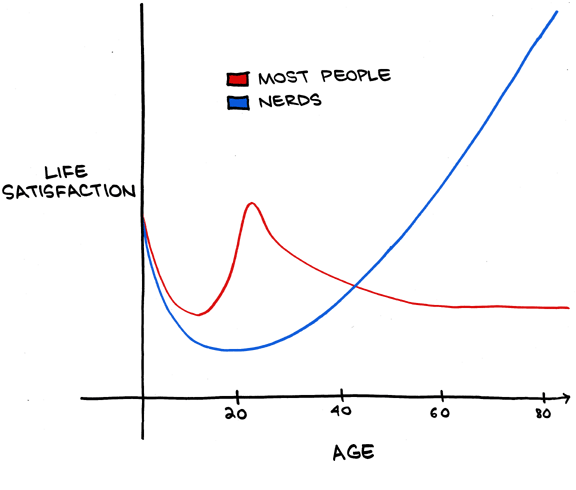
Subscribe to:
Posts (Atom)
